
Digital audits for maximum food safety
How Nagel-Group is setting new standards in quality assurance with an audit app
World Food Safety Day on 7 June draws attention worldwide to the importance of safe food throughout the entire supply chain. After all, health risks can only be effectively avoided through consistent monitoring. For food logistics provider the Nagel-Group, this is not just about compliance with established standards, but above all about the continuous development of processes. A key driver in this is the digitalisation of internal audits.
From paper to real-time transparency
Audits – the systematic and regular review of processes and standards within a company – are a key element of quality management. In practice, these processes were long characterised by paper-based checklists, Excel analyses and manual data collection. This made transparency and traceability difficult.
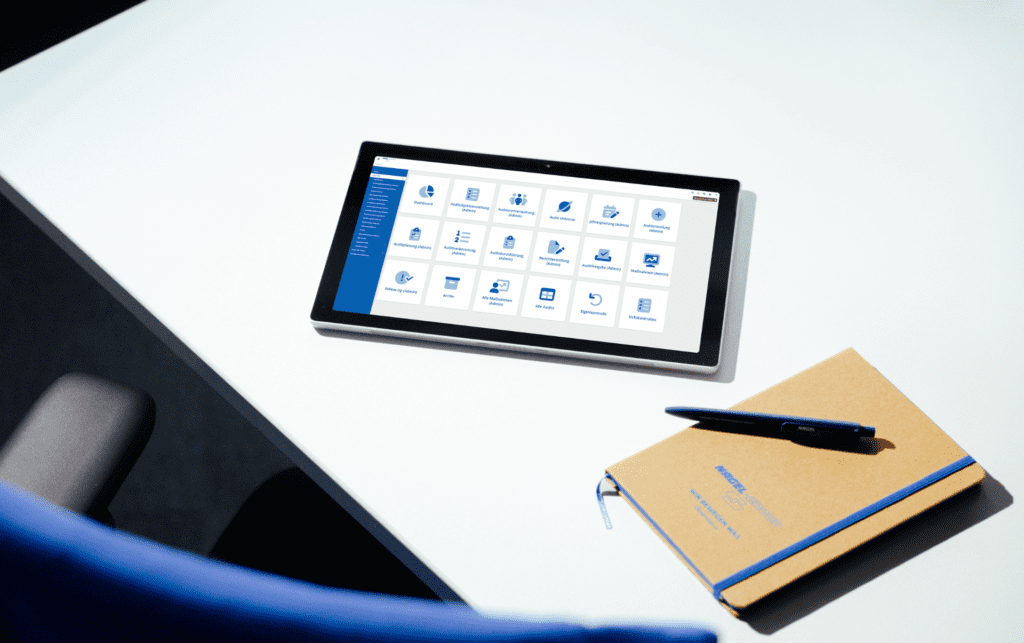
With the introduction of an innovative audit app, the Nagel-Group has now fundamentally modernised this approach. The solution, developed in collaboration with DextraData GRC Technologies, is primarily designed to digitise internal audit processes. External audits are also supported, particularly with regard to the structured recording and tracking of corrective actions. Key benefits of the app include the real-time recording of audit data, integration with existing QM systems and the digital management of corrective actions. Since February, the application has been in use at all 130 Nagel-Group sites, replacing fragmented processes with an integrated, digital system.
The QM managers at the individual sites access standardised questionnaires directly via a web browser; these are based on the IFS Logistics Standard¹ and supplemented with company-specific requirements. Non-conformities can be recorded immediately on-site, including photographic documentation. This creates greater efficiency and transparency in real time.
 Structure fosters accountability
A key feature of the app is its integrated action management system. Once an audit has been completed, specific actions are assigned directly to the relevant sites. Implementation is carried out in a structured and transparent manner – including deadlines, responsibilities and digital evidence in the form of photos. This transforms a traditional audit process into a closed-loop system comprising data collection, evaluation and consistent follow-up.
Centralised data collection allows results to be evaluated across sites and visualised in dashboards. This enables trends to be identified at an early stage and actions to be targeted effectively.
A uniform evaluation system also makes the results comparable and measurable. Sites requiring optimisation can thus be provided with targeted support, for example through more frequent audits or additional measures. This transforms quality assurance from a reactive to a proactive discipline: it is data-driven, transparent and controllable.
Greater transparency in quality assurance
In addition to traditional audits, the app also supports regular visual inspections and self-checks as an integral part of food safety. These checks – ranging from hygiene inspections to site security tests that identify potential vulnerabilities regarding access to the warehouse – are recorded digitally and integrated directly into the quality management system.
Florian Reichert, Team Lead Quality & Food Safety and Environment at the Nagel-Group, emphasises how effective this approach is in practice: “With the audit app, we are creating a consistent digital structure for our audit processes. Non-conformities and corrective actions are not only documented, but also tracked transparently and implemented consistently. This increases accountability throughout the process and strengthens personal responsibility in our branches.”
Kilian Lakomski, Customer Success Engineer at DextraData GRC Technologies, adds: “By digitising audit processes, information is generated and processed directly within the system context. This enables a consistent database for monitoring, reporting and action management.”
Technology as a driver of product safety culture
The introduction of the audit app is more than just a step towards digitalisation – it forms part of the Nagel-Group’s comprehensive approach to ‘product safety culture’.
After all, food safety is not achieved solely through certifications such as IFS Logistics, HACCP² or BIO³; rather, it is the result of a combination of clear processes, trained staff and a strong sense of responsibility in day-to-day work. The app creates a shared platform for this, involving everyone from the QM manager to the on-site operational team.
¹ IFS Logistics: International standard for ensuring food safety and quality management in logistics.
² HACCP (Hazard Analysis and Critical Control Points): A preventive system for identifying and controlling critical points in the food supply chain.
³ BIO certification: This is a prerequisite for the storage and handling of organic products in accordance with EU guidelines.